


As international trade became more of a day-to-day reality in the 20th century, a number of acts were passed in the United States granting the government authority to impose tariffs to protect domestic industries. The Trade Expansion Action of 1962 is one such act, and tariffs imposed under Section 232 continue to have a significant impact on trade between nations to this day.
Key Takeaways
- Tariffs may only be levied under Section 232 following an investigation from the U.S. Secretary of Commerce reveals that certain items “threaten to impair” national security.
- Steel, aluminum, and certain derivative products are most heavily impacted by the enactment of these tariffs, which vary from 25% to 50% ad valorem.
- As of April 7, 2025, these levies do not stack with reciprocal tariffs enacted under separate executive actions.
- Section 232 tariffs are often mentioned alongside Section 301 tariffs, which derive from the Trade Act of 1974.
Find out how Section 232 tariffs can impact your cost of doing business in this article.
What is a Section 232 Tariff?
By definition, a Section 232 tariff varies from other import levies since it is recommended, investigated, and implemented via a process laid out in Section 232 of the 1962 Trade Expansion act.
The act was initially used to grant authority to the U.S. president during trade negotiations, giving them latitude to negotiate rates of up to 80%. More recently, the Trump and Biden administrations have leaned on its provisions to increase tariffs on select commodities and materials that are vital to international trade.
Related: Section 301 Tariffs: A Comprehensive Guide

Get Expert Assistance With Duty Calculations, HTS classification, and More.
Our 45 Minute Licensed Import Consulting Session Will Personally Guide You.
Modern History and Application of Tariffs from the 1962 Trade Expansion Act
For a specific example of how Section 232 tariffs are determined and applied, we can look to the imposition of steel and aluminum tariffs during President Trump’s first administration. In early 2018, he assessed several notable tariffs, including a 25% increase on steel and 10% increase on aluminum from most countries.
Section 232 also includes a provision that allows domestic manufacturers to request that competitive foreign goods receive high tariffs to help protect their US-based businesses.
Let’s take a closer look at some of the commodities that incur Section 232 tariffs.
What Commodities Are Affected by Section 232?
There are several commodities primarily impacted by Section 232 tariffs, some of which are:
- Steel: This sturdy metal is used in the construction of thousands of products, and each of these may face tariffs on the steel portion of their composition.
- Aluminum: Like steel, aluminum is found across a wide variety of goods, and Section 232 tariffs will apply to them in many cases.
- Automobiles and Auto Parts: Bringing vehicle manufacturing to the US is one of the current administration’s biggest goals. Discouraging the purchase of foreign vehicles and parts via tariffs is part of that effort.
Other imported goods affected by Section 232 tariffs include copper, semiconductors, timber, and medium & heavy duty trucks and parts per Megan Ealey, Certified Customs Specialist.
The rates of these tariffs can change almost overnight. In the following section, I’ve put together the current rates for the most common Section 232 tariffs, which will be updated as changes occur.
What is the Current Status of Section 232 Tariffs?
As of the time of this writing, the most significant of these import taxes are as follows:
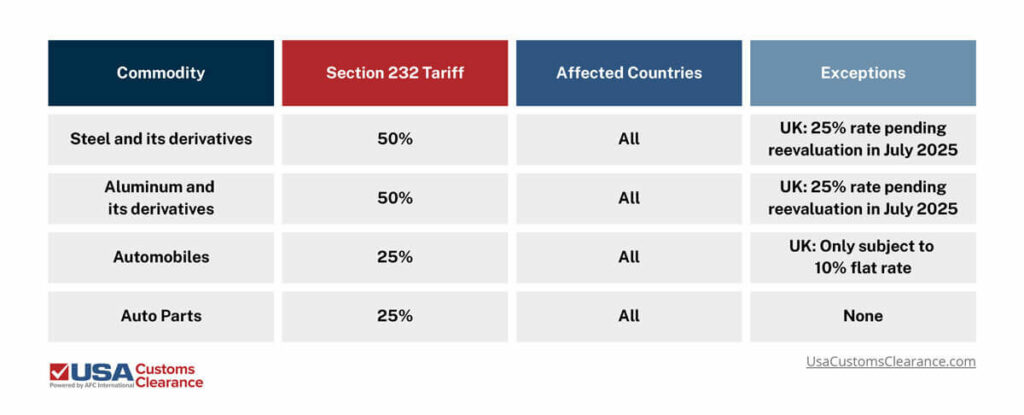
Common derivative articles of steel and aluminum include hardware such as nails, staples, nuts, and bolts.
Let USA Customs Clearance Help You Through Tariff Turmoil
The ever-shifting landscape of tariffs can cause even the most experienced importers to stumble and risk hurting their bottom line. If you’re unsure how much you should be prepared to pay in duties and tariffs, or you’re looking for ways to minimize these costs, we’re here to help.
The licensed customs brokers at USA Customs Clearance have decades of combined experience helping businesses of all sizes with each aspect of the importing process. Whether you need help calculating tariffs and duties or full brokerage services, we’re standing by to take the guesswork out of this complex process.
Our services include:
- Secure customs brokerage
- Expert one-on-one consulting sessions
- Protecting your information from competitors
- And more
Call us at (855) 912-0406 or submit a contact form online today!

 Copy URL to Clipboard

Did you find this article helpful?
See more of our coverage on Google.
Add usacustomsclearance.com as a preferred source!

Add usacustomclearance.com as a preferred source!
See more of our coverage in Google's Top Stories.

Add your first comment to this post