

From collecting tariffs and duties to detaining and inspecting suspicious shipments, Customs and Border Protection (CBP) is one government agency no importer can avoid. Familiarizing yourself with CBP’s role in customs clearance is an important step to running a successful import business in the US.
Key Takeaways
- CBP works on behalf of the US Department of Homeland Security (DHS), collecting taxes and duties while ensuring compliance from US importers.
- Importers in the US usually interact with CBP via the Automated Commercial Environment (ACE) portal on the agency’s site, through which port filing paperwork is submitted.
- To clear US customs, shipments must adhere to guidelines established by CBP, such as timely submission of documents and accurate HTS classifications.
Join us as we further examine CBP’s duties and roles in the context of US customs clearance.

Worried about using the wrong HTS code or import documentation?
Our 45 Minute Licensed Expert Consulting Will Personally Guide You.
What is Customs and Border Protection (CBP)?
"CBP is the branch of the United States government charged with securing the US border by facilitating international travel and enforcing trade regulation, which includes importation and exportation." - Robert Bowman
Some of CBP’s vital contributions to the importing of goods include:
- Receiving and Verifying Documentation: CBP requires multiple documents from importers in order to vet shipments for accuracy of information.
- Performing Inspections: These can be triggered by discrepancies in paperwork or simply chosen at random. Importers may responsible for paying inspection fees on their goods if the cargo must be unloaded (devanned) for inspection.
- Tariff and Duty Collection: Duties, tariffs, and customs fees are collected from importers by CBP on behalf of the federal government.
Let’s examine each of these responsibilities in more depth.
Verifying Information on Import Documents
Like any bureaucratic department worth its red tape, CBP collects reams of paperwork from US importers. However, in the last several years, much of this paperwork has been converted to electronic documentation. Importers can submit many of the documents CBP requires via the Automated Commercial Environment (ACE) on the agency’s website.
Some key documents involved in the CBP clearance process are:
- Form 7501, aka Entry Summary: Contains the shipment’s entry type, mode of transport, HTS codes, and customs bond type among other related information. It is used to assess duties and taxes while also providing relevant data to CBP of the import transaction.
- ISF Filing: If you’re shipping goods via ocean freight, this document must be submitted to CBP at least 24 hours prior to the shipment leaving port.
- Any Required Permits/Licenses: Some goods require special permits during the import process, such as endangered plant species, explosives, and goods with potential military applications
- Bill of Lading (BOL): There are a few different versions of this document, and CBP uses it to gather information about the routing of the shipment, parties and costs involved in transportation, and the type & quantity of freight.
Speaking of HTS codes, which are used to identify goods imported to the United States for categorization and tax calculation purposes, importers must be careful when determining which code applies to their shipment(s). Using the wrong code is a common cause of inspections by CBP.
Related: What Documents Do I Need To Import and Export?
What Happens if Your Shipment is Inspected by CBP?
If you’re a commercial importer, it’s practically unavoidable that you’ll encounter some kind of hold or holds in the process of doing business. Even if you do everything perfectly or partner with an experienced customs broker, a random inspection should be expected from time to time.
Several different scenarios can play out here depending on the type of inspection CBP executes. These types include:
- Non-Intrusive Inspection (NII): These are conducted using commercial-grade X-ray machines to scan containers for suspicious cargo.
- Tailgate Examination: No, this doesn’t involve old Chevy pickups and red plastic cups: rather, CBP visually inspects contents of a cargo container by opening its doors.
- Intensive Exam: This is where things can start getting complicated (and expensive) for the importer. The cargo is taken to a centralized examination station (CES) for full unloading and detailed inspection.
- PGA Inspection: Agencies such as the FDA, USDA, and EPA sometimes perform inspections of their own based on criteria above and beyond that of CBP.
Each successive tier of inspection will cost you more and more should such an event occur.
Related: 12 Benefits of Using a Customs Broker
Paying Tariffs, Duties, and Other Customs Fees
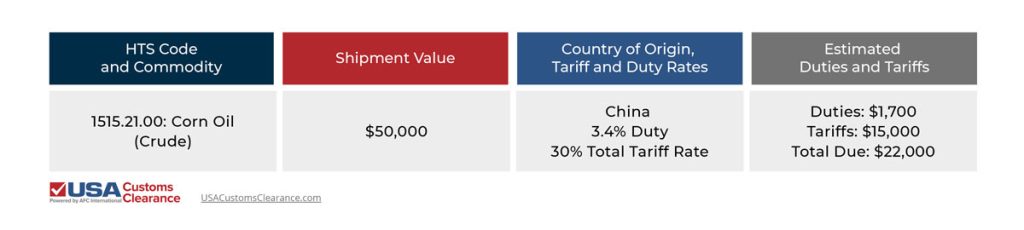
Any taxes on imports assessed by the federal government will be collected by CBP. The importer must pay the estimated duties and tariffs on their shipment within 10 days of the cargo being released. I’ve included a sample tariff and duty calculation for a typical import transaction. Note the country-specific tariff rate.
This is the chief reason CBP requires commercial importers to have a customs bond in place. The bond ensures that CBP gets paid even if the importer fails to make the payment themself. In turn, the surety that issued the bond will pursue remuneration from the importer for having paid these fees on the importer's behalf.
Take the Guesswork Out of Importing With USA Customs Clearance
It’s easy for importers, especially those with little to no experience, to be intimidated by CBP’s involvement in the customs clearance process. However, you don’t have to face them or any partner government agency on your own. We’re here to help.
USA Customs Clearance has decades of experience helping US-based importers cut through the red tape of the US import process. From constantly changing tariffs to expert guidance with import compliance, we stand ready to partner with you in the complex world of international trade.
Our full list of customs clearance services includes:
- Personalized, one-on-one customs consultations
- Securing your import records
- Success bundles for new importers
- And more
Call us today at (855) 912-0406 or submit a contact form online. We’re ready to help you clear customs with confidence.

 Copy URL to Clipboard

Did you find this article helpful?
See more of our coverage on Google.
Add usacustomsclearance.com as a preferred source!

Add usacustomclearance.com as a preferred source!
See more of our coverage in Google's Top Stories.

Add your first comment to this post