

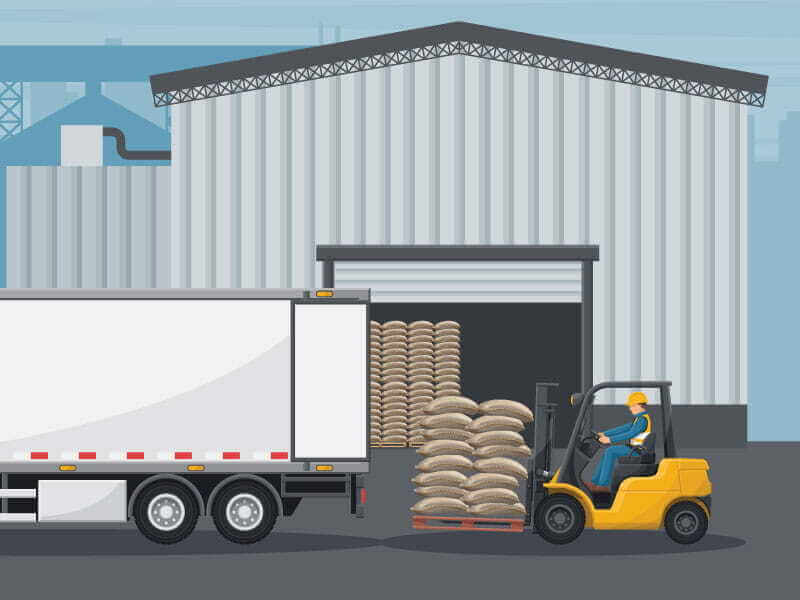
With a population of over 340 million, the United States has plenty of mouths to feed. Farmers in the US rely on potash, a key ingredient in many fertilizers, to keep their fields fertile enough for consistently high production. However, there are a limited number of countries in the world with access to significant potash resources, and the US is not among them.
Key Takeaways
- The U.S. imports approximately 90% of its potash supplies, most of which has come from Canada since 2020.
- 95% of potash is processed into potassium chloride, a fertilizer ingredient that promotes resistance to diseases, healthy roots, and overall growth.
- As of March 4, 2025, the U.S. applies a 10% tariff to Canadian and Mexican-sourced potash that doesn’t fall under USMCA specifications.
- Potash sourced from China is subject to the same 20% flat rate tariff as all Chinese imports, which was also instituted in March 2025.
Given its importance as a fertilizer supplement, importers of potash need to keep themselves up-to-date with changing regulations and executive orders. We’re here to help you do just that.
How Much Potash Does the U.S. Import?
In 2023, The United States imported well over 90% of its potash used for fertilizer from global trading partners. This reliance on imports is due to the country's limited natural reserves of this potassium-rich mineral. Soil that isn’t rich enough in potassium on its own requires potash-based fertilizers to keep up with the production demands placed on farmers in the United States. While the mineral has applications in other commodities, the overwhelming majority of potash is made into potassium chloride to strengthen food production efforts.
Since the country’s natural reserves are insufficient, importing potash into the US is necessary to meet the needs of the population. The unique circumstances under which the mineral is formed means that natural reserves are concentrated in just a few areas across the planet.
Where Does the U.S. Import Potash From?
Of the previously mentioned 90% figure, 80% was brought into the country from Canada. Our northern neighbor’s proximity and access to vast quantities of the mineral in Saskatchewan and Ontario has made them our number one source of potash for years.
In the table below, I’ve listed the top five countries that supplied common forms of potash to the United States throughout 2023.
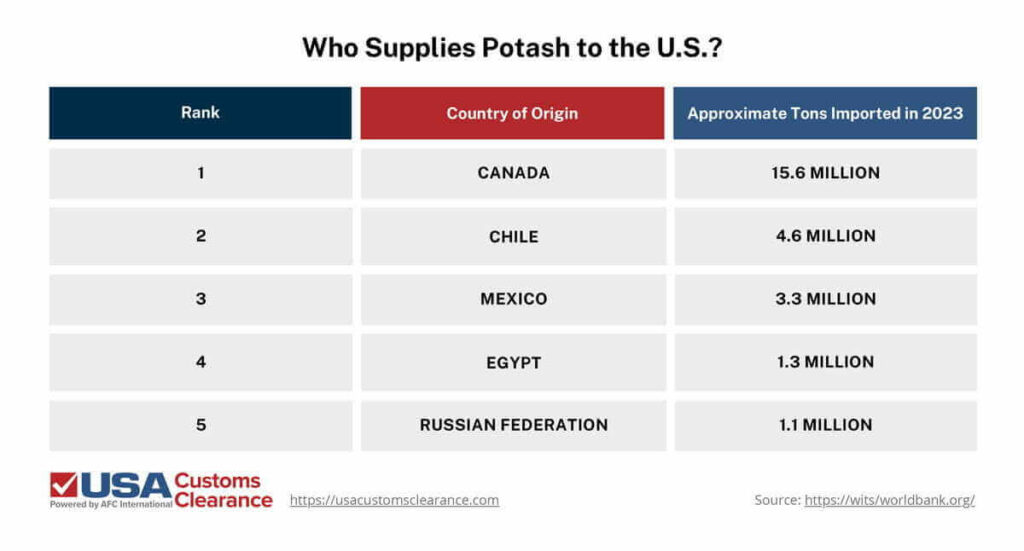
You probably already noticed how much this mineral is subject to trade fluctuations from political actions due to economic sanctions on Russia, which precludes them as a trading partner as of this writing. This illustrates how much importers need to stay up-to-date with changes in order to make real-time adjustments to their supply chains.
Related: Importing From Canada to US: Key Tips for Success

Don’t waste your valuable time and resources struggling with customs on your own. Let our importing specialists take that burden off your shoulders.
HTS Codes for Potash
This mineral can be acquired from a number of natural sources, and the United States Harmonized Tariff Schedule (HTS) reflects this fact. I’ve compiled some of the most frequently imported types of potash by their HTS codes for reference below.
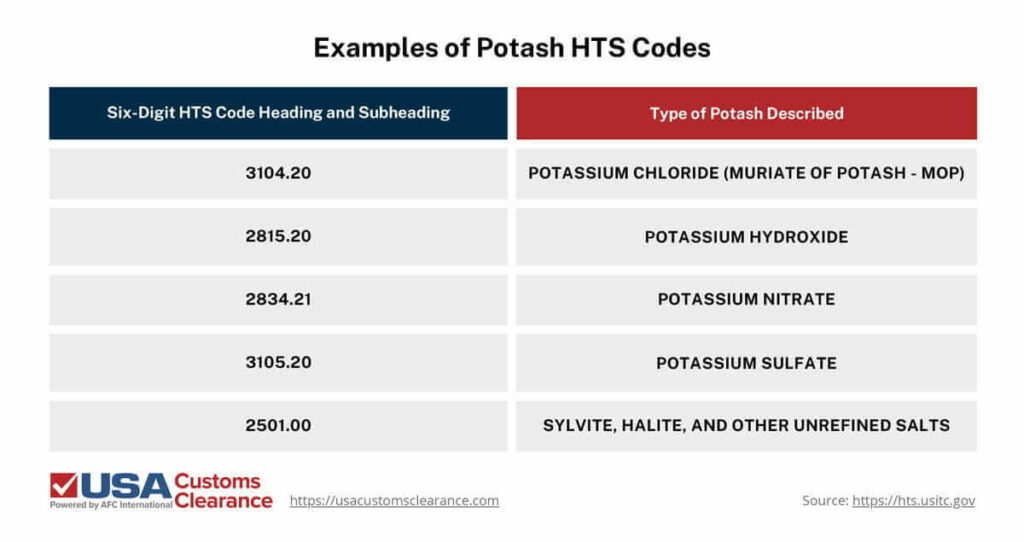
The examples listed above have a free general rate of duty. However, tariffs may be applied to potash imports from certain countries or suppliers for economic or political reasons.
Tariffs on Potash From Mexico and Canada
On March 4, 2025, a presidential executive order applied a 10% tariff to potash imports from Canada and Mexico that are not covered by the United States-Canada-Mexico Agreement (USMCA). Some forms of potash (and their associated HTS codes) that do not fall under the agreement and will be subject to the 10% tariff include:
- 2815.20.0050: Potassium hydroxide in solid form
- 3104.20.0050: Potassium chloride containing more than 62% potassium oxide by weight
- 3105.10.0000: Mineral or chemical fertilizer packaged in tablets of a gross weight not exceeding 10 kg
A more complete list of potash HTS codes affected by the 10% tariff is available in this government bulletin.
There is also a flat 20% tariff on all goods imported from China (including potash), which was instituted on March 3, 2025.
Related: Import Costs from Mexico: Overcome the Maze of Expenses
Importing Potash With USA Customs Clearance
The varieties of forms the mineral can take, along with determining the correct rate of duty and/or tariffs that apply to your shipment, can easily confuse even the most seasoned shippers. If you’re looking for guidance, you’re in the right place.
The brokers and trade experts at USA Customs Clearance specialize in assisting importers with all aspects of navigating United States customs regulations. With our expertise on your side, you’ll be able to avoid shipping delays, fines, and other common importing issues.
Our full list of services includes:
- One-on-one import consulting
- Secure customs clearance
- Trouble-free importer of record (IOR) registration
- And more
Don’t let the complexities of importing potash keep your business from growing. Call us at (855) 912-0406 or fill out a contact form online today!

 Copy URL to Clipboard

Did you find this article helpful?
See more of our coverage on Google.
Add usacustomsclearance.com as a preferred source!

Add usacustomclearance.com as a preferred source!
See more of our coverage in Google's Top Stories.

Add your first comment to this post